What Is Design & Build Procurement?
Design and Build Procurement is a construction method in which one contractor accepts responsibility for both the design and construction of a project. Instead of appointing separate design consultants and a building contractor under different agreements, the client enters into a single contract with a Design & Build contractor, creating one clear point of responsibility throughout delivery.
This reflects the structure described by the Joint Contracts Tribunal’s guidance on Design and Build procurement, where the main contractor undertakes both design and construction responsibilities.
This is a widely used procurement route within the UK construction industry, particularly for commercial, industrial, healthcare, education and public-sector developments where coordination, accountability and programme management are important.
The client normally provides a detailed set of project requirements, commonly known as the Employer’s Requirements. These define the project’s objectives, required performance, operational needs and desired outcomes. The appointed contractor then develops the design, coordinates the necessary consultants and specialists, and manages construction through to completion.
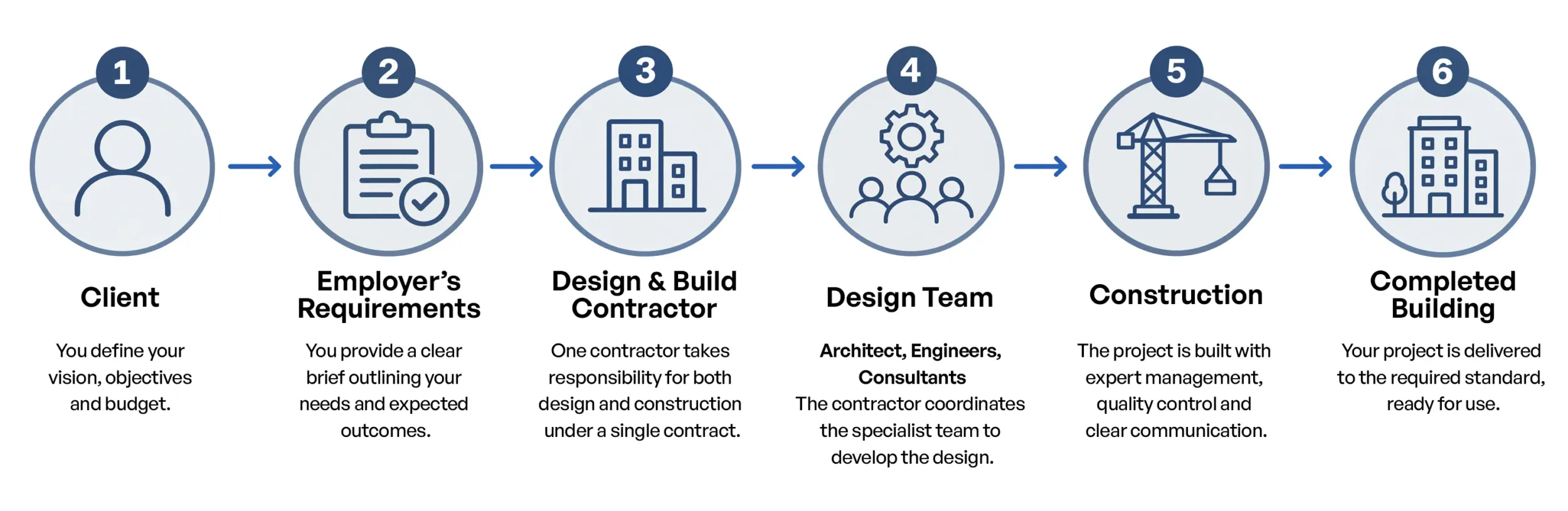
Because design and construction expertise are brought together earlier, buildability issues can often be identified and addressed before work begins on site. This integrated approach can help improve communication, support cost planning and reduce the risk of delays or disputes caused by fragmented responsibilities.
For organisations seeking a streamlined delivery model without compromising quality, this route can offer an effective solution across a range of sectors. At Jarvale, our experienced team provides bespoke Design & Build services covering the journey from early concept and design coordination through to construction and final handover.

How Does the Design & Build Procurement Process Work?
This integrated procurement process brings briefing, design development, cost planning and construction together under one contractual arrangement. Although every scheme has its own technical and operational requirements, projects usually progress through a series of clearly defined stages.
The precise sequence will depend on the project and contract, but the stages broadly align with the briefing, design, construction and handover activities set out in the RIBA Plan of Work.
1. Initial Client Brief
Every successful project begins with a detailed understanding of the client’s objectives. During the initial consultation, the client outlines:
- the scope,
- available budget,
- operational requirements,
- programme expectations
- and any known planning or site constraints.
These details inform the Employer’s Requirements and give the contractor a clear foundation for developing an appropriate technical and commercial solution.
For many schemes, this stage will also involve early consideration of planning, surveys, site investigations and project viability before detailed design work begins.
2. Design Development
Once the brief has been established, the contractor coordinates architects, structural engineers, building-services consultants and other specialists to develop the design.
Early contractor involvement allows construction methods, buildability, sequencing, procurement, programme and cost to influence design decisions as they are made. This can identify practical challenges before work starts and reduce the likelihood of expensive redesign later.
Where required, activities such as ground investigations, condition surveys and planning consultations can also be coordinated during this phase.
3. Cost Planning & Programme Development
As the design progresses, the budget and construction programme are reviewed and refined alongside it.
Rather than completing the entire design before obtaining construction input, this delivery route allows pricing, procurement advice and value-engineering opportunities to inform decisions from an early stage. This helps the client understand the financial implications of design choices and maintain alignment with the approved budget.
Our guide to cost planning in construction explains how early financial analysis supports informed decision-making throughout a project.
4. Construction Phase
Once the design, statutory approvals and programme have reached the required stage, construction can begin.
The contractor manages:
- The site operations
- Subcontractors
- Procurement
- Health and safety
- Quality assurance
- Programme control
Because design coordination and construction management sit within the same organisation, technical questions can usually be routed and resolved through a more unified project team.
This can be especially valuable on complex commercial construction projects involving numerous consultants, specialist trades and building systems.
5. Completion & Handover
The final stage covers inspections, testing, commissioning, certification and formal handover.
Building systems are checked to confirm that they operate as intended, outstanding items are addressed, and the client receives the relevant project documentation and information needed to operate the completed facility.
This continuity, from the initial brief and design coordination through to construction and handover, is one of the principal benefits of an integrated procurement model. Many of Jarvale’s completed projects demonstrate how joined-up delivery can support complex laboratory, healthcare, commercial and industrial schemes.
The Key Advantages of Design & Build Procurement
This route is frequently selected because combining design and construction within one contractual structure can improve accountability, communication and coordination. The benefits achieved will depend on the quality of the brief, the capability of the contractor and the way the project team works together, but several advantages are commonly associated with an integrated delivery model.
A Single Point of Responsibility
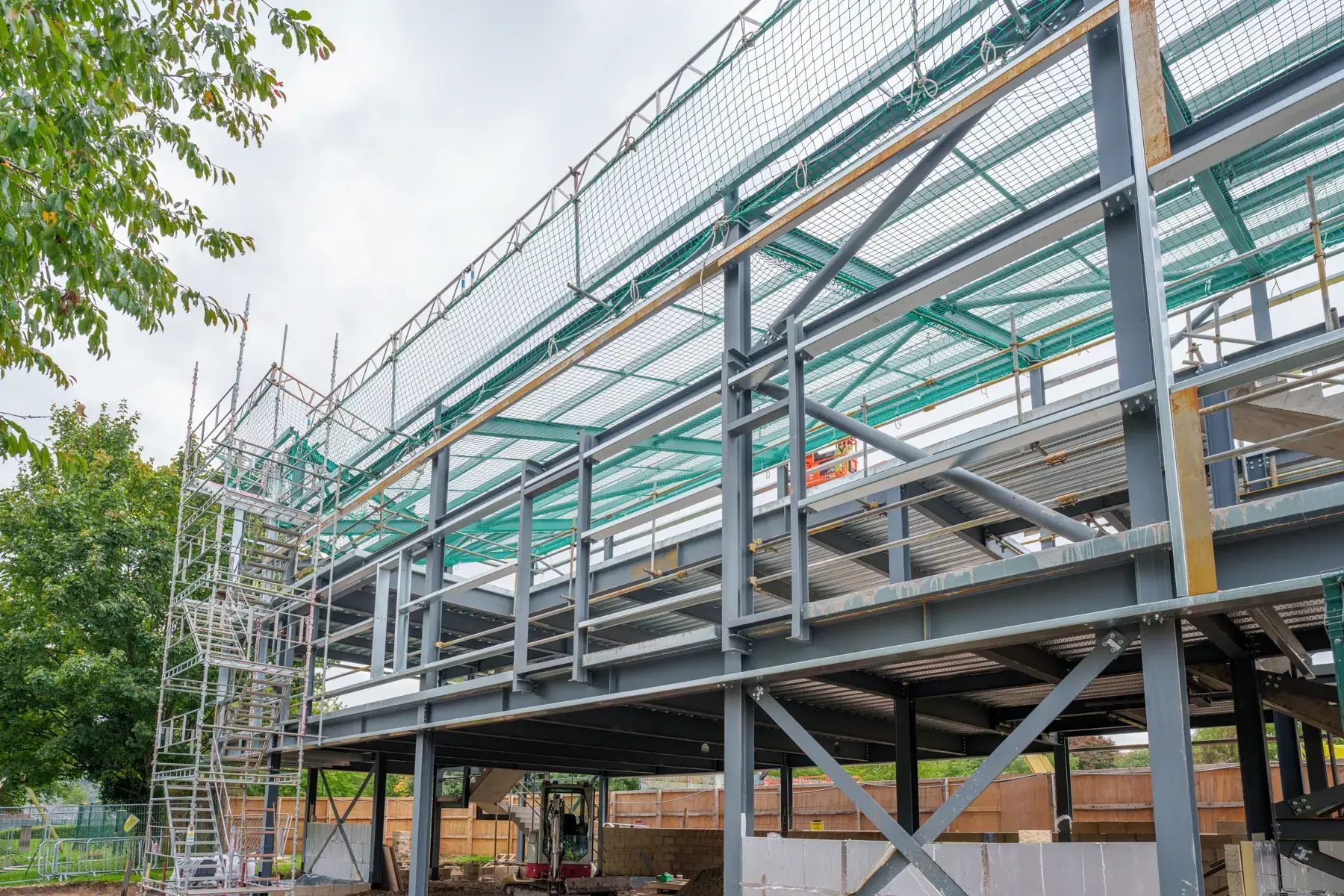
A major benefit is that the client works with one principal organisation throughout the project. Instead of administering separate appointments for the design consultants and building contractor, responsibility for coordinating both elements sits with the Design & Build contractor.
This gives the client a clear point of contact and can reduce uncertainty over which party is responsible for resolving design or construction matters.
Earlier Collaboration Between Design & Construction
Traditional procurement commonly completes much of the design before a building contractor is appointed.
Under an integrated route, construction knowledge can contribute much earlier. Designers, engineers, specialists and site teams can consider buildability, logistics, sequencing, cost and programme while the proposals are still developing.
This collaboration can lead to better-coordinated details, more practical construction solutions and fewer avoidable problems on site.
Earlier Cost Visibility & Control
Involving construction and commercial expertise during design development allows costs to be reviewed as decisions are made.
Budgets can be tested against evolving specifications, while alternatives and value-engineering opportunities can be explored before work begins. This does not remove all financial risk, particularly where the brief changes, but it can give clients greater visibility over the likely cost consequences of their decisions.
Our guide to cost planning in construction explores this process in greater detail.
Faster Project Delivery
Where the contract, design and approvals allow it, certain design, procurement and construction-planning activities may overlap.
Long-lead materials can be identified earlier, buildability reviews can begin before every detail is complete, and site preparation may be coordinated alongside later design stages. This can create opportunities to shorten the overall programme, although the achievable timescale will always depend on the project’s complexity and statutory requirements.
Improved Risk Management
Every construction scheme involves risks relating to design, cost, programme, compliance and site conditions.
Placing responsibility for coordinating design and construction within one organisation can provide clearer ownership of many of those risks. Early investigations, coordinated decision-making and transparent communication remain essential, but the contractual structure can make responsibility easier to identify and manage.
Better Communication Throughout the Project
An integrated project team allows architects, engineers, specialists, subcontractors and construction managers to work towards the same agreed outcomes.
Clear reporting procedures and regular design reviews can support faster decisions and more consistent communication from pre-construction through to handover. Jarvale projects such as the Swann Morton Laboratory and Navigation Way Development demonstrate the value of coordinated delivery on technically demanding schemes.
Potential Disadvantages to Consider
Although this procurement route offers important benefits, it is not automatically the best solution for every project. Its suitability depends on factors including design complexity, client priorities, programme constraints, the quality of the brief and the degree of design involvement the client wishes to retain.
Understanding these potential limitations helps clients compare available procurement strategies objectively rather than selecting a route based only on its perceived advantages.
Less Direct Control Over the Design
Once the Employer’s Requirements have been agreed, responsibility for developing and coordinating much of the detailed design normally transfers to the contractor.
Clients who want to direct every detailed design decision may therefore find the arrangement different from traditional procurement. Clear requirements, scheduled design reviews, approval procedures and effective communication are needed to ensure the developing proposals remain aligned with the client’s expectations.
A Well-Defined Brief is Essential
Because significant responsibility transfers to the contractor, the initial brief must clearly explain the client’s requirements.
The Employer’s Requirements should set out the required functions, standards, performance outcomes, constraints and key design expectations. Under the JCT Design and Build Contract, the employer provides detailed documentation outlining its requirements, while the contractor is responsible for completing the design and carrying out the works.
Ambiguity at this stage can lead to differing interpretations, so sufficient time should be allowed to prepare and review the documentation before contract award.
Changes During Construction May Affect Cost & Programme
Late client changes can affect any construction project. Although early collaboration should reduce the need for revisions after work starts, significant changes may require redesign, new approvals, altered procurement arrangements or reprogramming. Early stakeholder engagement and effective cost planning remain essential.
Selecting the Right Contractor Matters
The success of any Design & Build project depends heavily on the experience and capability of the contractor leading the project.
Clients should look for contractors with:
- a proven track record of delivering projects of a similar size and complexity,
- together with strong project management,
- design coordination,
- and construction expertise.
Reviewing previous construction projects, understanding sector experience and assessing how the contractor manages communication throughout the project can all help when selecting the right delivery partner.
Not Every Project Requires Design & Build
While Design & Build Procurement is highly effective for many commercial developments, it is not always the most appropriate procurement route.
Some clients may prefer a traditional procurement approach where they appoint independent consultants to complete the design before appointing a contractor. Others may require specialist procurement strategies due to funding requirements, public sector regulations or unique project constraints.
Understanding the strengths of each procurement route enables clients to make informed decisions based on the specific needs of their project rather than assuming one approach is universally better than another.
Design & Build vs Traditional Procurement
Design & Build and Traditional Procurement can both deliver successful construction projects, but they allocate design responsibility and contractual relationships differently.
Under the traditional route, the client normally appoints and manages the design team separately before engaging a building contractor. Under Design & Build, the contractor accepts responsibility for coordinating both design and construction within one contractual arrangement.
The most suitable option depends on:
- the client’s priorities,
- the maturity of the design,
- the required programme
- and the level of control the client wishes to retain.
Design Responsibility
Under Traditional Procurement, architects, engineers and consultants are generally appointed directly by the client to prepare the design. The construction contractor is appointed separately to build in accordance with that information.
With Design & Build, the main contractor coordinates and completes the design as well as carrying out the works. The Employer’s Requirements define what the client needs, while the Contractor’s Proposals explain how those requirements will be met.
This structure provides one principal point of responsibility, whereas the traditional route retains separate contractual relationships for design and construction.
Programme & Project Delivery
Traditional Procurement normally follows a more sequential programme: the design is developed, tender information is prepared, contractors submit bids, and the construction appointment follows.
An integrated route may allow contractor input, procurement planning and selected design activities to progress in parallel. This does not guarantee a shorter programme, but it can create opportunities to identify buildability and sequencing considerations earlier.
Cost Certainty
Under Traditional Procurement, a more developed design is commonly issued for competitive tender, allowing prices to be compared against a defined scope.
With Design & Build, commercial input can be introduced while the design is evolving. Budgets and specifications can therefore be reviewed together, although the reliability of the agreed price will still depend on the clarity of the Employer’s Requirements and any subsequent changes.
Client Involvement
Traditional Procurement may suit clients who want their independently appointed consultants to retain detailed control of the design.
Design & Build usually requires intensive client input during briefing and early design development, followed by structured reviews as the contractor coordinates the detailed solution. Neither arrangement is inherently superior; each offers a different balance of control, responsibility and integration.
Which Procurement Route Is Right for Your Project?
Both procurement methods have their place within the construction industry.
Traditional Procurement may be appropriate where clients require extensive design control before appointing a contractor or where project requirements are highly defined before construction begins.
Design & Build Procurement is often chosen where clients value integrated project delivery, streamlined communication, earlier cost certainty and a single point of responsibility throughout the project lifecycle.
For organisations delivering commercial construction projects, industrial developments, healthcare facilities and education schemes, the collaborative nature of Design & Build Procurement can provide significant benefits from initial concept through to project completion.
If you’re considering which procurement route is most appropriate for your next development, our experienced team can provide tailored advice alongside our Design & Build services, helping you identify the most suitable approach for your project’s objectives.
When Is Design & Build the Best Procurement Route?
This approach is often well suited to:
- projects where early contractor involvement,
- coordinated delivery,
- programme management
- and clear accountability are central priorities.
It may be particularly valuable where specialist systems, operational constraints or complex interfaces require designers and construction teams to collaborate from an early stage. However, the decision should always reflect the specific objectives and risks of the individual project.
Commercial Developments
Commercial offices, retail premises and mixed-use developments often require careful coordination between budget, programme, specification and operational objectives.
Early contractor involvement allows buildability, procurement, sequencing and cost to be considered alongside the developing design. Jarvale delivers commercial construction projects throughout Yorkshire, Derbyshire and the Midlands using delivery strategies tailored to each client’s requirements.
Industrial & Manufacturing Projects
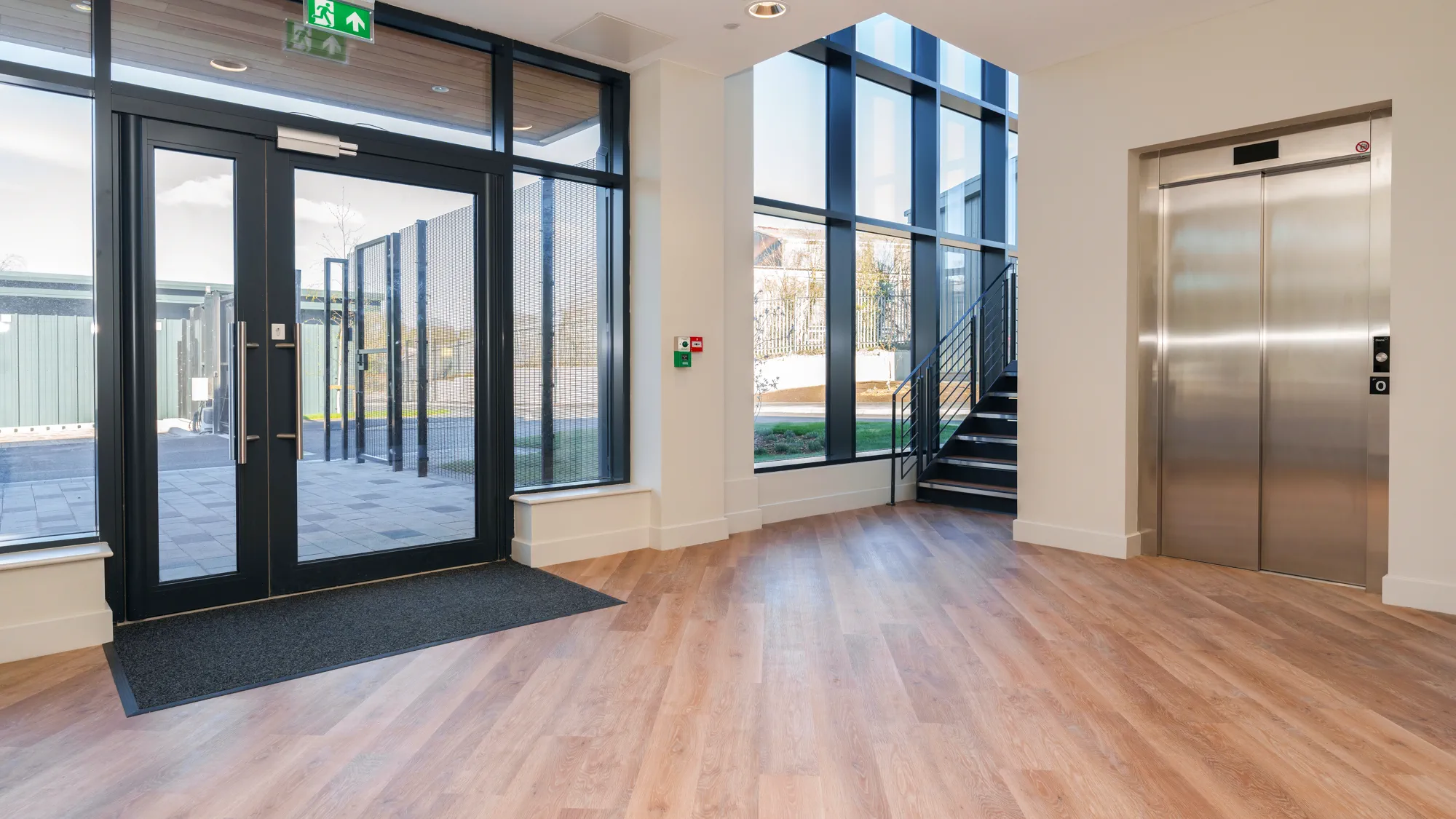
Industrial and manufacturing facilities can involve process equipment, heavy servicing requirements, specialist structures and challenging operational constraints.
An integrated project team can coordinate production requirements, mechanical and electrical installations, structural design and construction logistics together. Projects such as the Swann Morton Laboratory and United Caps Production Facility illustrate the value of coordinated delivery in technically demanding environments.
Healthcare & Education Facilities
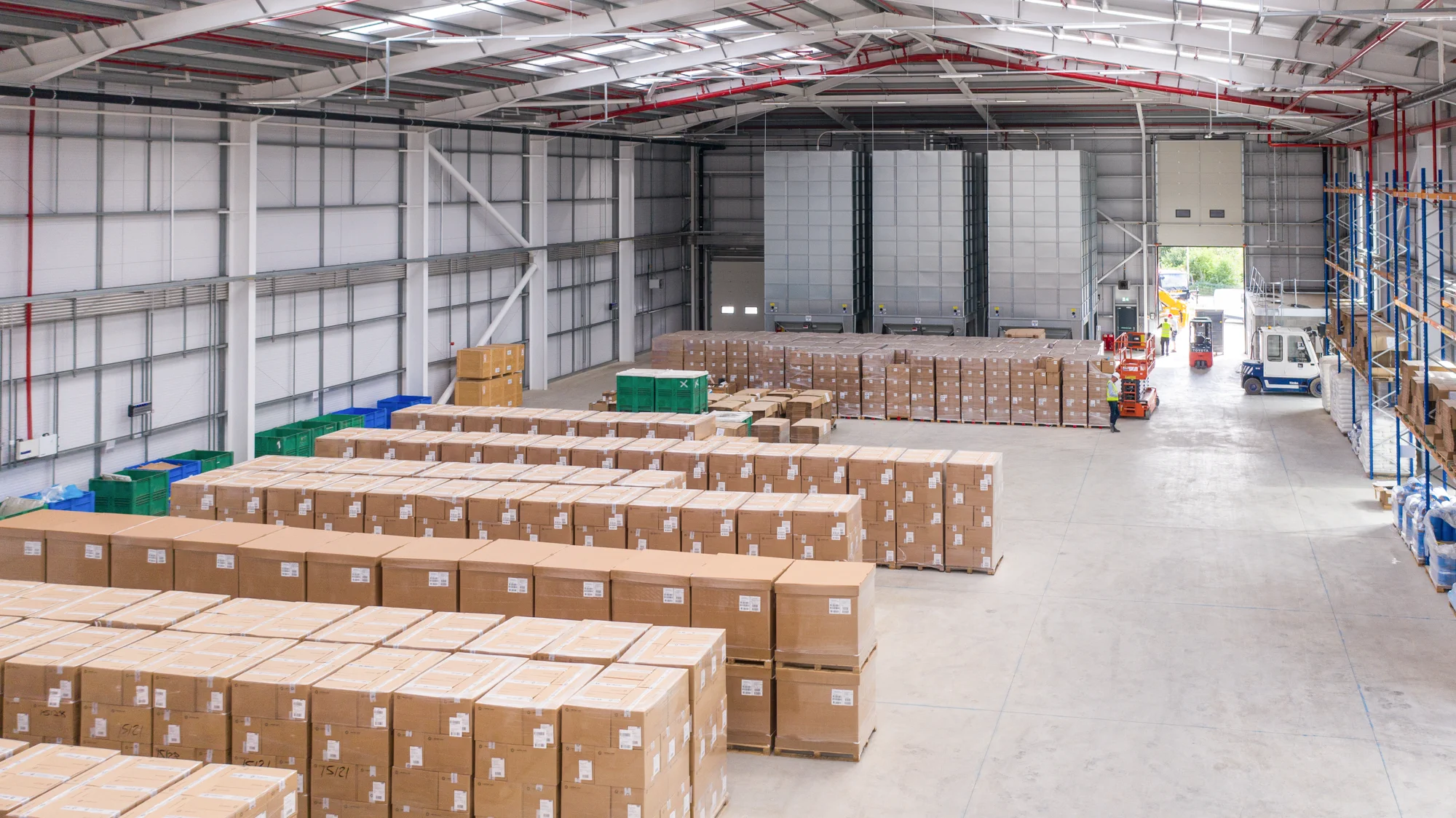
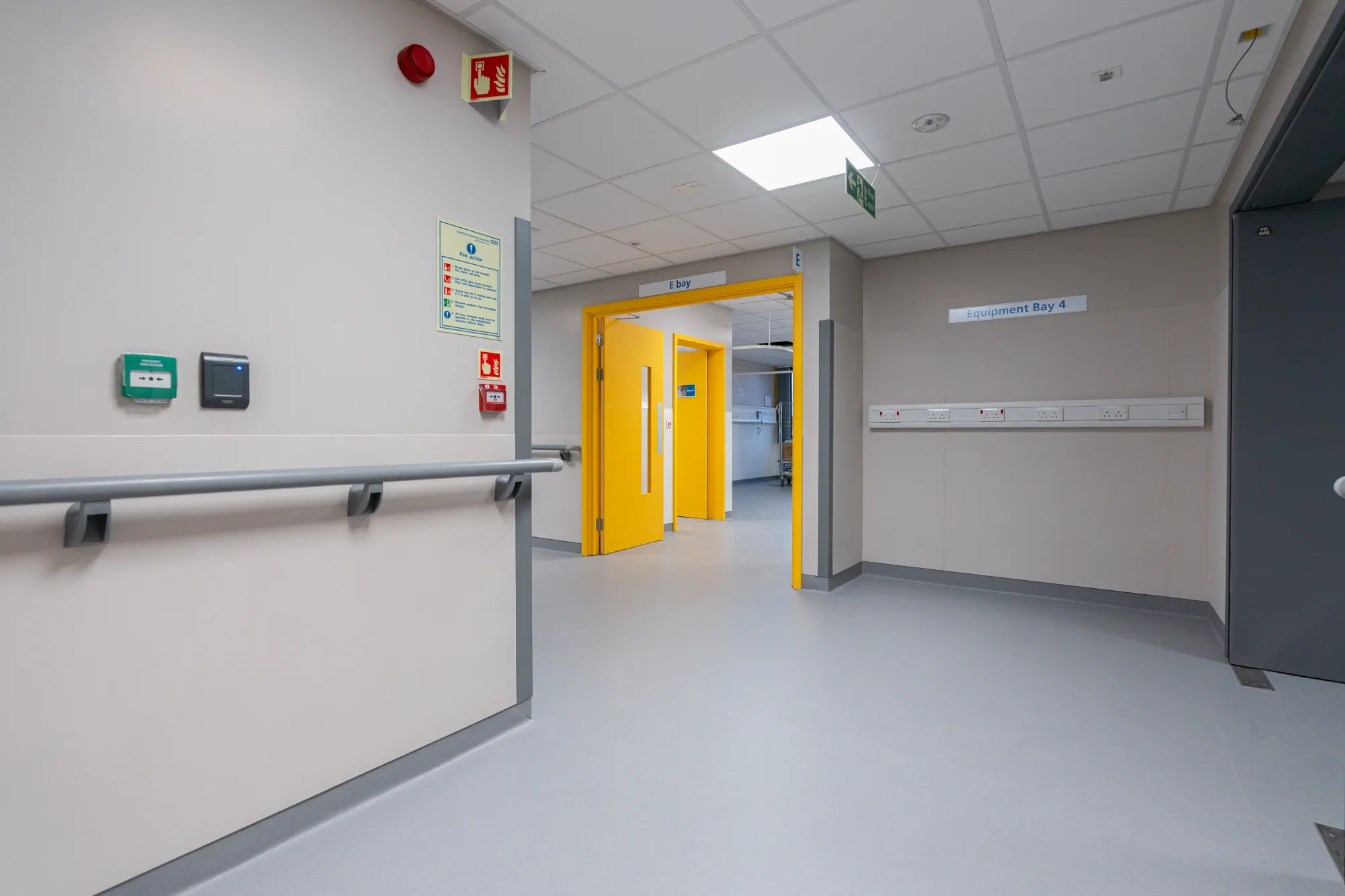
Healthcare and education buildings often remain operational while construction is taking place.
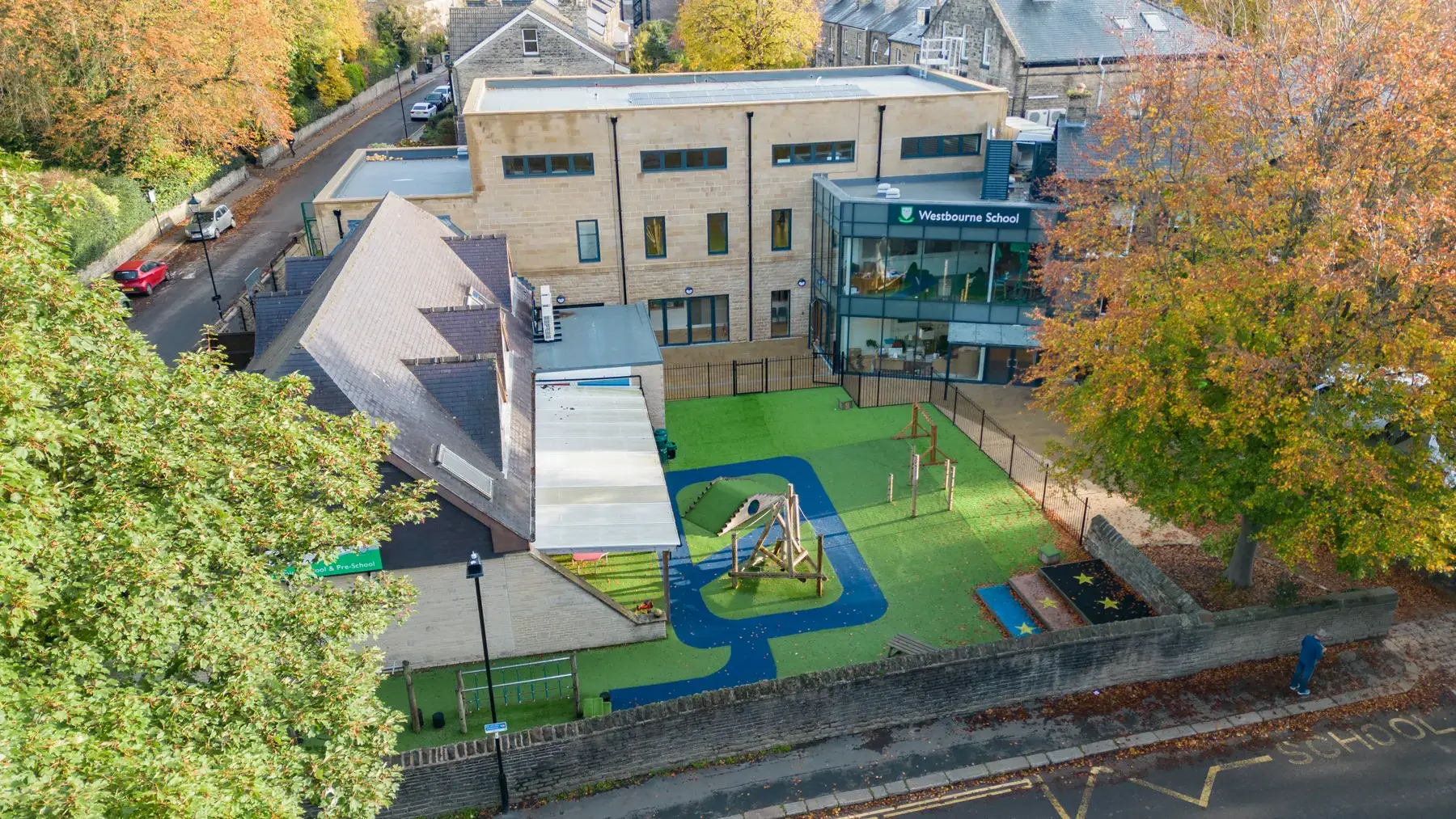
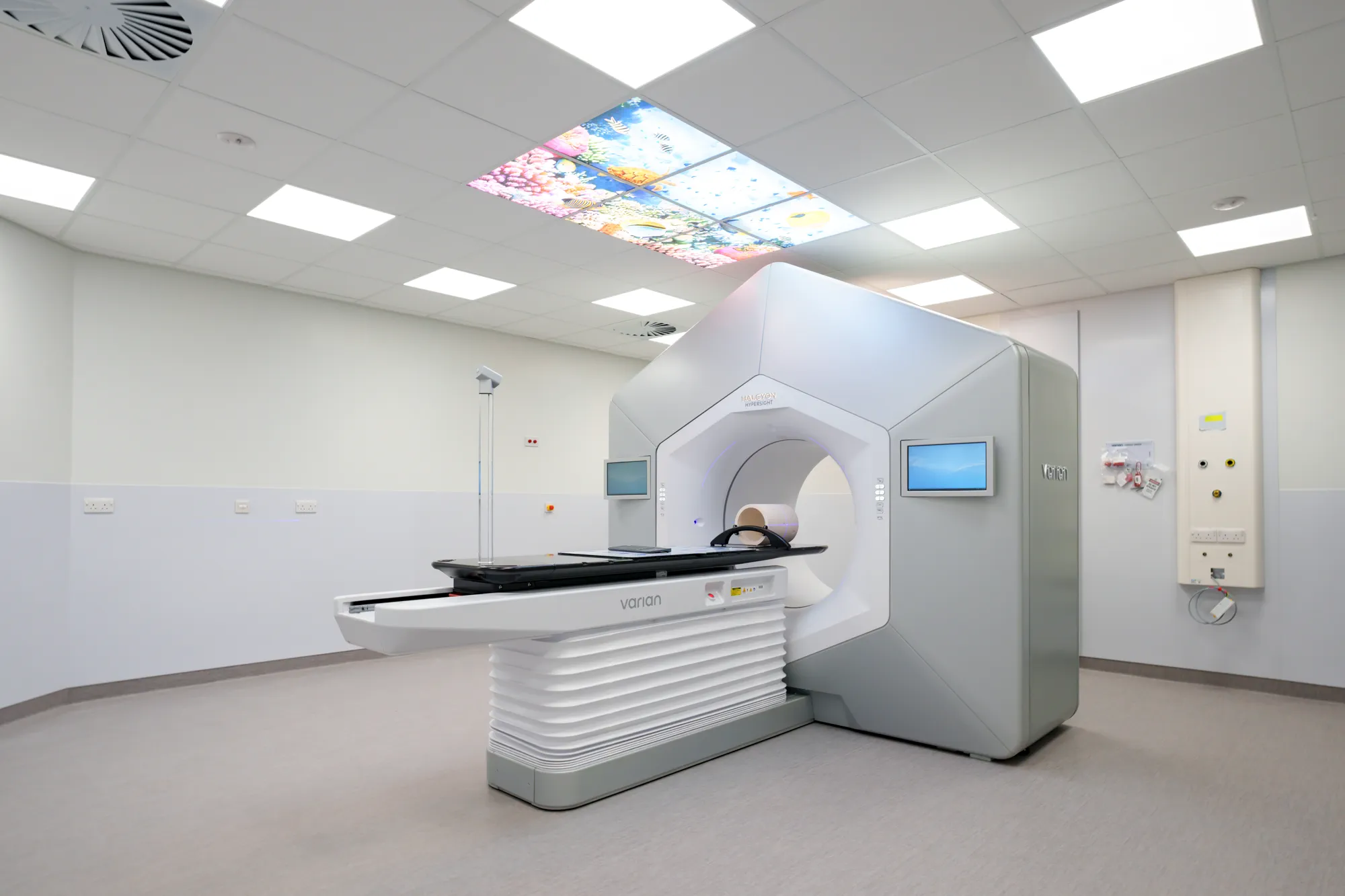
Early coordination allows phasing, access, infection-control or safeguarding requirements, logistics and safety measures to influence the design and programme. Jarvale has experience across the healthcare sector and education sector, where maintaining continuity can be as important as completing the physical works.
Projects with Challenging Programmes
For many organisations, completing a project quickly and efficiently is a key priority.
Because this integrated approach promotes early collaboration between the design and construction teams, opportunities often exist to improve programme efficiency, coordinate procurement earlier and reduce delays caused by design changes or fragmented communication.
This can be particularly valuable where businesses are relocating, expanding facilities or working to fixed operational deadlines.
Clients Looking for A Single Delivery Partner
Some clients value the simplicity of appointing one organisation to coordinate the design consultants, specialists and construction team.
This arrangement can establish clearer reporting lines and accountability while reducing the number of separate contractual interfaces the client must administer. Jarvale combines Design & Build expertise with practical construction and project-management experience across multiple sectors.
Choosing the Right Procurement Route
Selecting an appropriate procurement strategy is one of the most important early decisions on a construction project. It influences:
- responsibility,
- design development,
- pricing,
- communication,
- programme management
- and the client’s involvement throughout delivery.
The Chartered Institute of Building’s procurement guidance also highlights the importance of informed procurement decisions and avoiding choices based solely on an unusually low initial bid.
Design & Build can be an effective solution where clients value early contractor input, coordinated delivery and one principal point of accountability. However, the decision should be based on the individual project’s complexity, risk profile, design maturity, budget, programme and operational priorities.
At Jarvale, we work with clients to understand those requirements before agreeing the most appropriate delivery approach. Whether the solution involves a fully integrated Design & Build service or another contractual route, our focus is on achieving a practical, high-quality outcome that provides long-term value.
To discuss the options available for an upcoming scheme, please contact us.
See Design & Build in Action
Featured Design & Build Projects
Some clients value the simplicity of appointing one organisation to coordinate the design consultants, specialists and construction team.
This arrangement can establish clearer reporting lines and accountability while reducing the number of separate contractual interfaces the client must administer. Jarvale combines Design & Build expertise with practical construction and project-management experience across multiple sectors.
Frequently Asked Questions
Design & Build Procurement FAQs
Discover More
Related Articles
Specialist Sector Expertise
Construction Solutions Across Multiple Industries
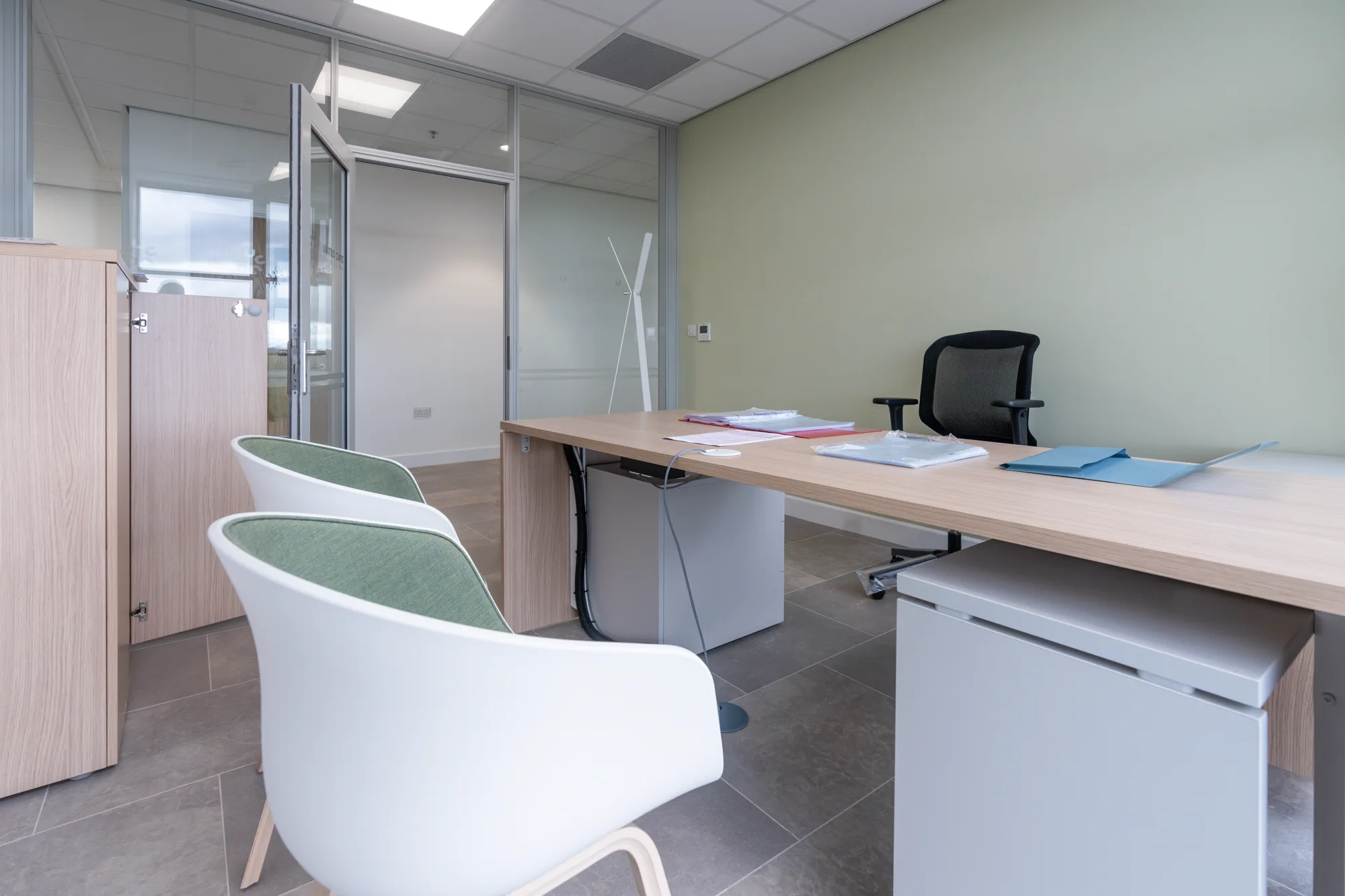
Our experience spans healthcare, education, commercial, industrial and retail environments, delivering projects safely, efficiently and with minimal disruption.
Contact Us
Start Your Project
Contact Us